

Making Heat Work in a Smart Fab
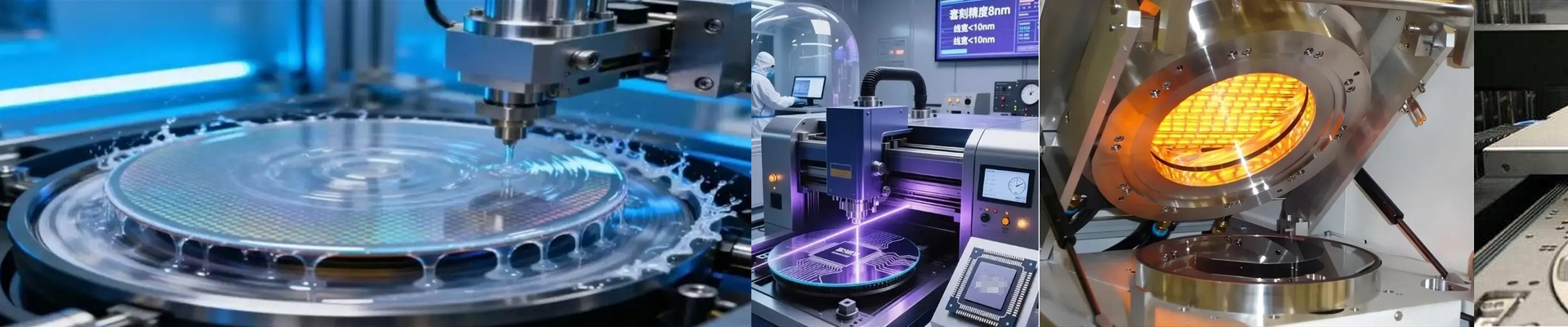
If you’re planning a Smart Fab for Industry 4.0, you’ve probably realized that the old way of heating things just doesn’t cut it. Traditional convection—basically blowing hot air around—is a nightmare in a clean room. You can’t have air swirling everywhere, kicking up particles and messing with your substrates. That’s where infrared (IR) comes in. Instead of fighting with the air, IR beams energy straight into the wafer. No wind, no turbulence, no drama. Just pure heat exactly where you need it.
Getting the Data Right
A digital production line is only as good as the data feeding it. We build our IR systems to talk directly to your PLC controllers. The best part? The response time is incredible. Because we use fast-acting IR lamps, you get heat-up and cool-down cycles that happen almost instantly. You don’t have to deal with that annoying “thermal lag” you get with resistive heaters, where you’re just sitting there waiting for the temperature to catch up. You can set everything to trigger based on real-time sensor feedback, so your thermal profile stays rock-solid, whether it’s the first batch of the day or the ten-thousandth.
The Trade-off: Power vs. Heat
Now, here’s the catch. High-wattage IR arrays are great for rapid curing or baking because they pack a huge punch in a small space. But all that energy has to go somewhere. When you push that much power, the housing takes a hit. If you don’t get your cooling manifolds and heat sinks dialed in, the ambient temperature will creep up, and suddenly you’re drifting outside your clean room tolerances. It’s a balancing act, but it’s manageable if you plan for the heat soak from the start.
Why IR Just Makes Sense
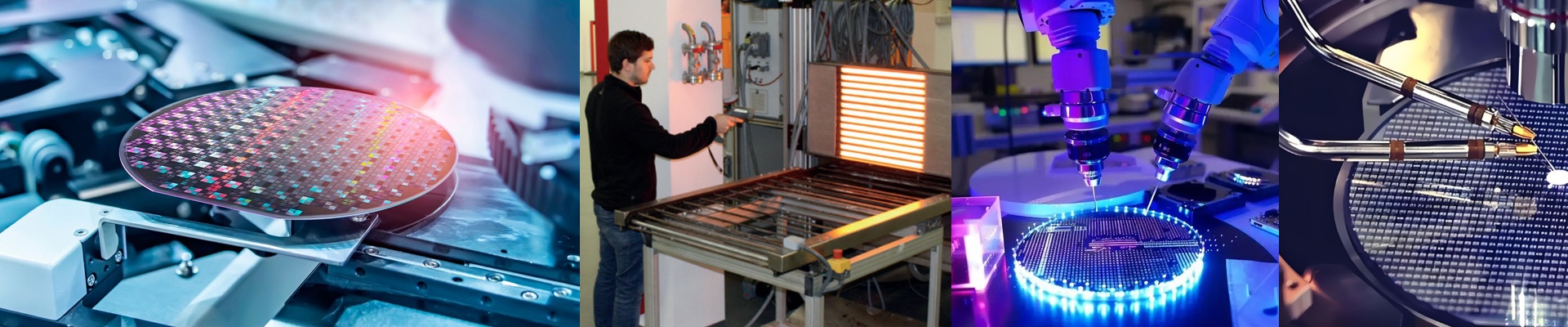
Let’s be honest: traditional ovens are huge, clunky, and take forever to recover their temperature. IR lamps are the opposite. They’re compact. This lets you build modular, “plug-and-play” heating zones. If a lamp burns out, you don’t have to tear the whole line apart—you just pop in a new one and keep moving. It keeps your uptime high and your floor space open. We stick with short-wave and medium-wave emitters because they actually penetrate the material. They don’t just sizzle the surface; they get deep in there, which slashes your cycle time per wafer. That speed is the only way to actually make a high-throughput, data-driven Fab work in the real world.