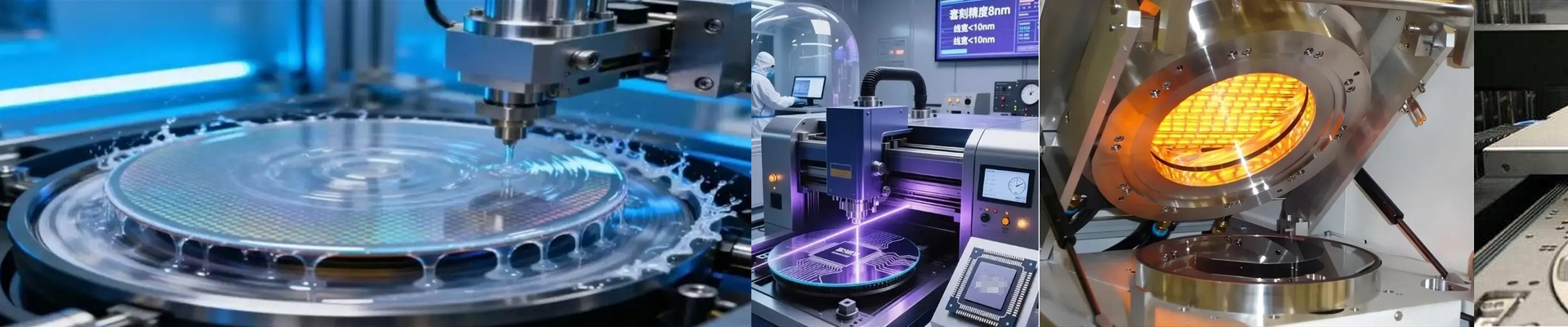
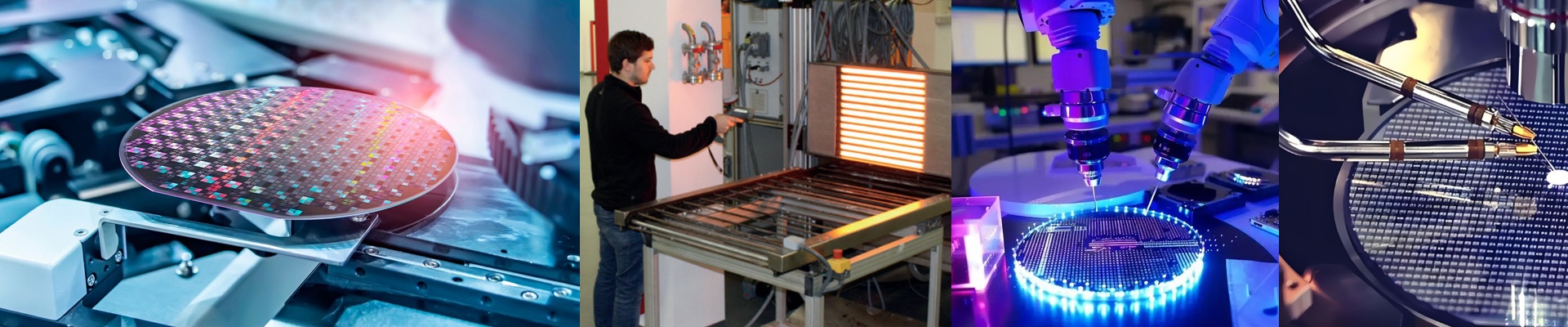

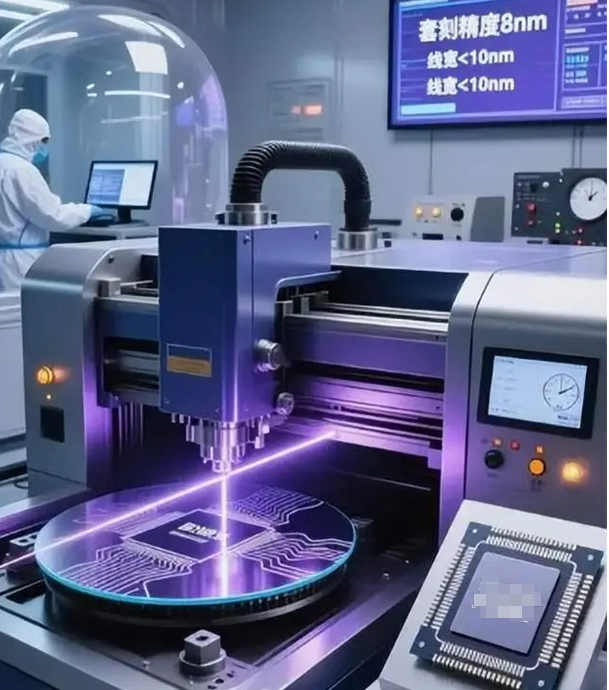
On the fab floor, yield is a temperature story. A 0.5°C drift in the MOCVD heater during GaN epitaxy shows up as thickness non-uniformity, scrapped wafers, and missed epi targets. We built our GaN MOCVD infrared heater to take that variability out of the equation. What matters under the hood The core is short-wave infrared, giving you sub-millimeter control of the thermal field. You get ±0.1°C steady-state uniformity across the susceptor, and repeatability that keeps cycle-to-cycle thermal budgets consistent. The infrared response is fast, so ramps don’t overshoot. And the profile holds up after maintenance, tool swaps, and even cleanroom airflow shifts. The design fits Class 1–100 cleanrooms, with zero particle generation and stable output past 5,000+ hours. Why it sticks in GaN MOCVD In GaN MOCVD, temperature stability writes the rules for layer quality and defect density. Keep the hot zone tight and you hit setpoints reliably, cut scrap, and shorten qualification cycles. The same precision helps photoresist bake steps too—soft bake and hard bake. You see better critical dimension control and fewer edge-bead headaches. And because the system reaches and holds temperature cleanly, you use less energy. The practical details Installation comes down to line-of-sight geometry and quartz viewport alignment. Misalign by a few tenths of a millimeter, and the hot zone drifts. Run a dedicated power feed with clean grounding, or you’ll invite EMI into the temperature loop. Any quartzware change means a quick recalibration, but once you set it, the profile stays put.