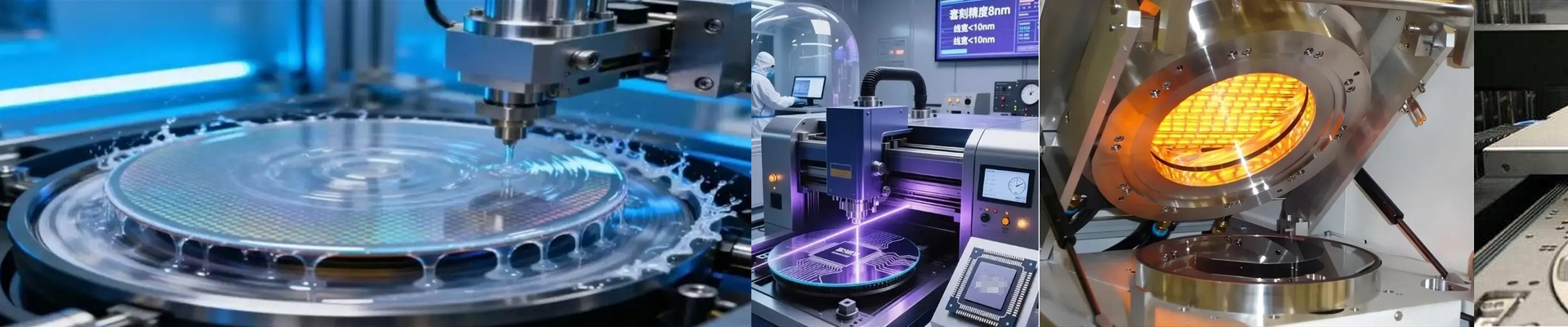
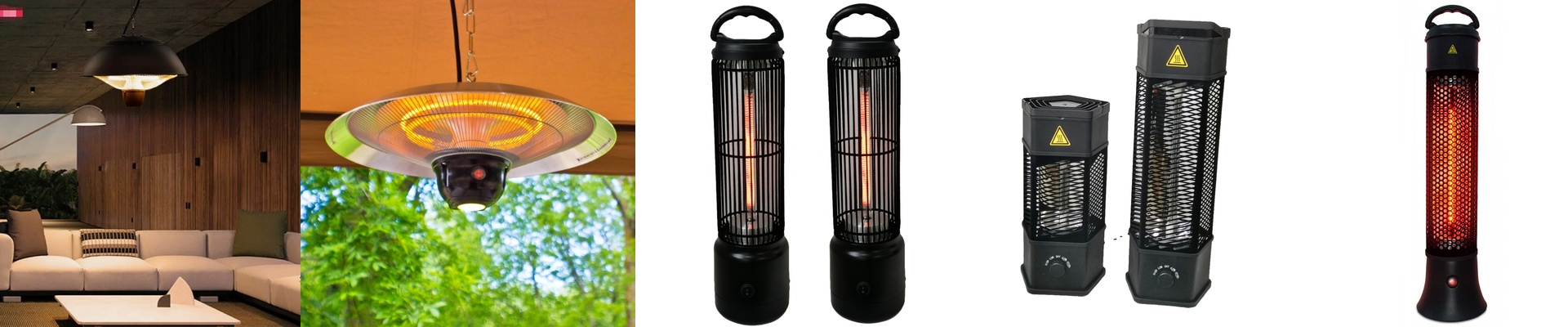
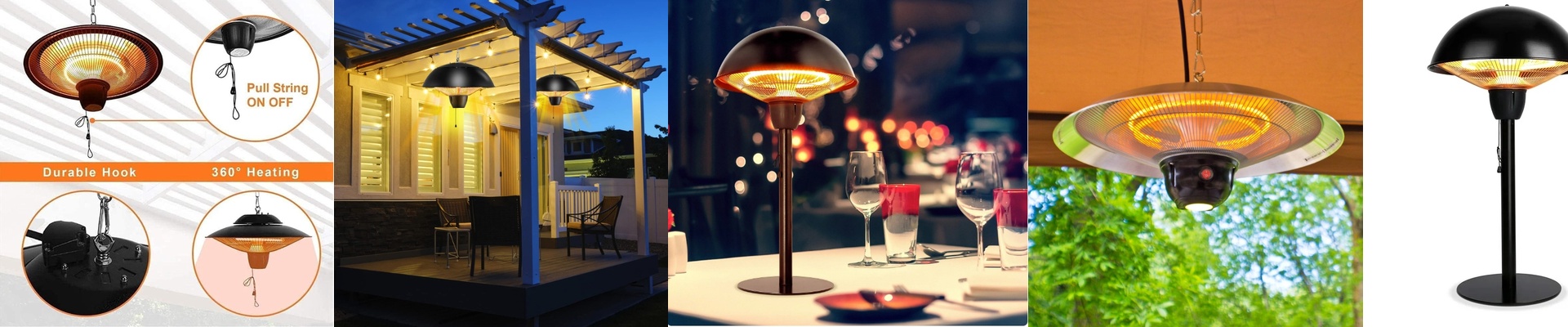
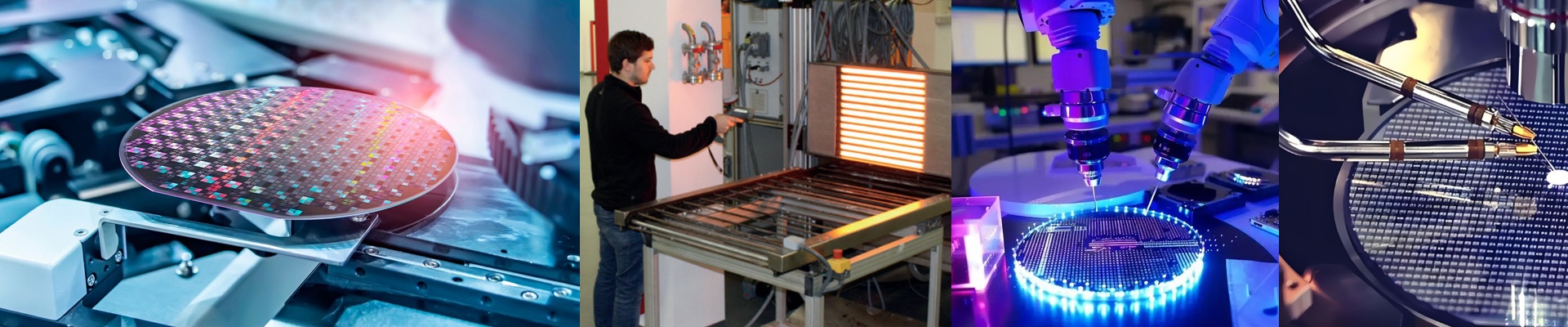
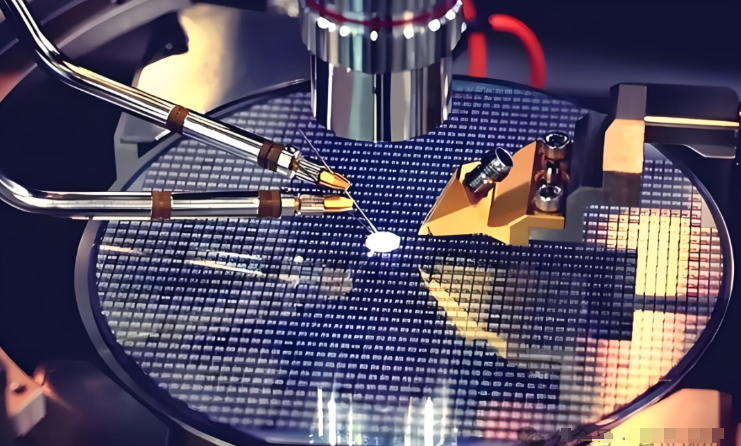
On the lithography floor, a soft bake that drifts even 2°C throws the photoresist thermal budget off. Solvent retention climbs. CD uniformity takes a hit. That difference is the line between a good lot and scrap. We built our infrared soft bake module to take that variability off the table.
Sulla linea di litografia, una soft bake che devia anche di 2°C compromette il budget termico del photoresist. L’accumulo di solventi aumenta. L’uniformità della CD ne risente. Questa differenza segna il confine tra un lotto conforme e lo scarto. Il nostro modulo di soft bake a infrarossi è stato progettato per eliminare questa variabilità.
What matters technically
Cosa conta a livello tecnico
The IR emitter uses short-wave quartz, heating the wafer surface directly—no contact. Temperature control holds ±0.1°C across the wafer, and repeatability stays within ±0.2°C lot-to-lot. The profile is quick: 15 seconds to stabilization, so you cut bake time without overshoot. L’emettitore IR utilizza quarzo a onde corte, riscaldando direttamente la superficie del wafer—senza contatto. Il controllo della temperatura mantiene ±0.1°C su tutta la superficie del wafer, con una ripetibilità entro ±0.2°C da lotto a lotto. Il profilo termico è rapido: 15 secondi per la stabilizzazione, permettendo di ridurre i tempi di bake senza superamenti.
Cleanroom Class 1–100 is supported by a particle-controlled design that keeps generation below 0.1 particle/cm². You get a lot of thermal output for the energy draw, and the module fits standard track footprints with 24/7 reliability. La camera bianca Classe 1–100 è supportata da un design con controllo particellare che mantiene la generazione sotto 0.1 particella/cm². Si ottiene un elevato output termico in rapporto al consumo energetico, e il modulo si integra con footprint standard dei tracciati garantendo affidabilità 24/7.
Why it works where you run it
Perché funziona nell’ambiente in cui lo si utilizza
You run mixed nodes and thin resists, and soft bake sets the stage for exposure latitude and defect performance. Tight thermal uniformity cuts footing and scum, improving critical dimension control and reducing rework. The fast ramp shortens cycle time and keeps throughput steady during lot changes. Si gestiscono nodi misti e resine sottili, e la soft bake prepara le condizioni per la latitudine di esposizione e la resa difettologica. Un’uniformità termica rigorosa riduce footing e scum, migliorando il controllo delle dimensioni critiche e riducendo rilavorazioni. La salita rapida accelera i cicli e mantiene costante il throughput durante i cambi lotto.
Fewer bake-related excursions mean less time chasing parameters and more time shipping good wafers. Minori deviazioni legate al bake significano meno tempo dedicato all’ottimizzazione dei parametri e più tempo per la spedizione di wafer conformi.
Things to know
Da sapere
Installation is straightforward on most tracks, but the IR path needs line-of-sight and a clean quartz window. Any film or residue scatters energy and skews the profile. The module also needs a stable power supply and cooling that matches the cleanroom HVAC envelope. L’installazione è semplice sulla maggior parte dei tracciati, ma il percorso IR richiede linea di vista libera e una finestra in quarzo pulita. Qualsiasi pellicola o residuo disperde l’energia e altera il profilo termico. Il modulo necessita inoltre di un’alimentazione stabile e di un raffreddamento compatibile con l’involucro HVAC della camera bianca.
Expect a short commissioning run to lock in the setpoint for your resist stack. Once that’s done, the process stays in control. È previsto un breve ciclo di messa in servizio per definire il setpoint specifico per lo stack resist. Una volta impostato, il processo rimane stabile.