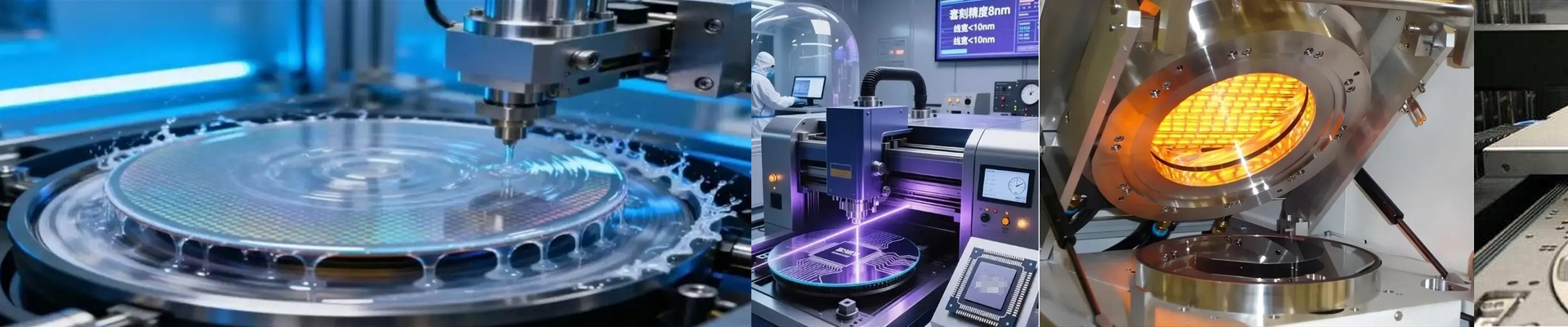
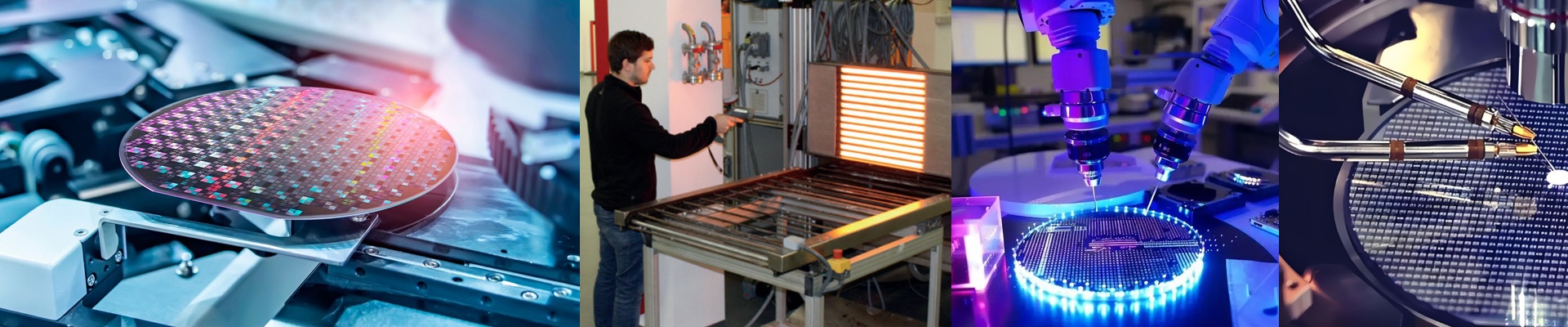
On the fab floor, underfill cure is where thermal budget turns into real yield. A few degrees of drift and you’re staring down voids, fillet issues, or CTE mismatch that comes back to bite you in reliability testing. We built our infrared underfill cure so the heat stays where it should: in the material, on target, and off the tool around it. What matters, technically We match the NIR emitters to the absorption profile of epoxy-based underfill, so the energy penetrates without cooking the die or the substrate. Temperature repeatability sits at ±0.1°C across the curing zone, and you hold uniformity in that same band when the optics and stage are aligned. The heater is cleanroom-compatible down to Class 1–100, with surfaces that keep particle counts down and a design that doesn’t outgas. Output stays stable through 24/7 runs, and the lamp module is built for 5,000+ hours with controlled decay—fewer surprises, less unplanned downtime. Why this works in packaging On packaging lines, the cure has to live with the pitch, the flux residue, and the thermal mass of the stack-up. Our IR profile hits cure temperature quickly, then holds without overshoot, so cycle time stays tight and warpage stays under control. You get consistent glass transition and crosslink density, which translates to predictable CTE behavior in temperature cycling. Energy use drops because the energy goes straight into the underfill, not into heating the carrier. Process windows open up, and scrap from underfill voids drops. Here’s what to watch for NIR curing is line-of-sight by nature, and emissivity can shift across substrates. Lock in stage speed, emitter height, and emissivity compensation, then document it. Installation needs a stable 240 V feed and cleanroom-rated cabling; plan on routine lamp replacement and quarterly calibration to keep that ±0.1°C performance intact.